

You land a wedge pin-high and watch it release to the back of the green. The next one comes in from the same yardage and stops a few feet from its pitch mark. To figure out which shot you can count on, compare how steeply each one lands and how much spin it has.
What descent angle helps a wedge stop on the green
A steeper landing generally helps a wedge stop sooner when carry, spin and green conditions are similar. Say two shots carry 80 yards with similar spin. One lands at 52 degrees and the other at 43 degrees. The 52-degree shot comes in steeper and would generally be the better choice when you have less green to work with. The angle to look for is the one that gives you repeatable carry and enough stopping power for the shot you play.
Descent angle is how steeply the ball comes down at landing. Launch angle describes how it leaves the clubface. A shot can launch high and still release when it lands, especially on a firm green or when there’s less spin. Read Flagstick’s guide to descent angle.
Compare two wedges to the same landing spot
Pick a yardage where two shots are comfortable for you. At 80 yards, that might be a controlled gap wedge and a fuller sand wedge. Use the ball you normally play and start with clean, dry grooves.
- Hit five shots with each wedge to the same carry target. Alternate clubs every shot or two so you can compare both at a similar rhythm.
- Record carry, descent angle and spin. Compare shots that carried close to the target, then check which wedge gave you the tighter group of carries overall.
- Take both shots to a practice green where approach shots are allowed. Pick one landing spot and watch how far each ball releases. Try from a tight lie, then from light rough when you can.
The indoor session gives you a baseline for ball flight. On grass, moisture between the ball and face and wear on the grooves can change spin. Green firmness and slope also affect the bounce and roll. See Titleist’s wedge spin testing.
Choose the shot that fits the pin
For a front pin just over a bunker, start with a carry that clears the sand comfortably. If your steeper shot carries that number reliably, it gives you a better chance of keeping the ball near the hole. From a damp lie or when the green is running firm, give yourself more room. Aiming toward the middle can leave a better putt than trying to land the ball on a narrow strip.
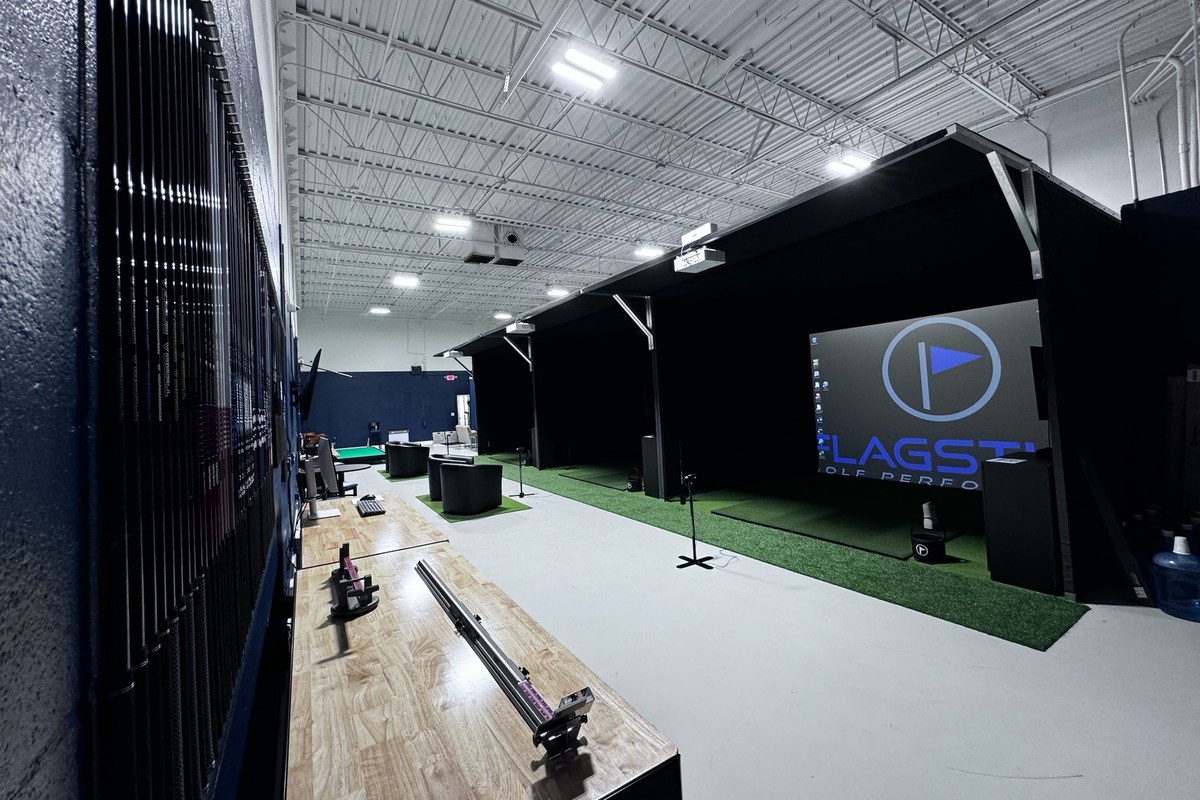
If your wedges cover the same yardage or one gives you a much less predictable result, bring both to Flagstick in Boynton Beach. We’ll compare your current clubs and look at how loft and sole design affect the shots you play. Explore wedge fitting at Flagstick.
